
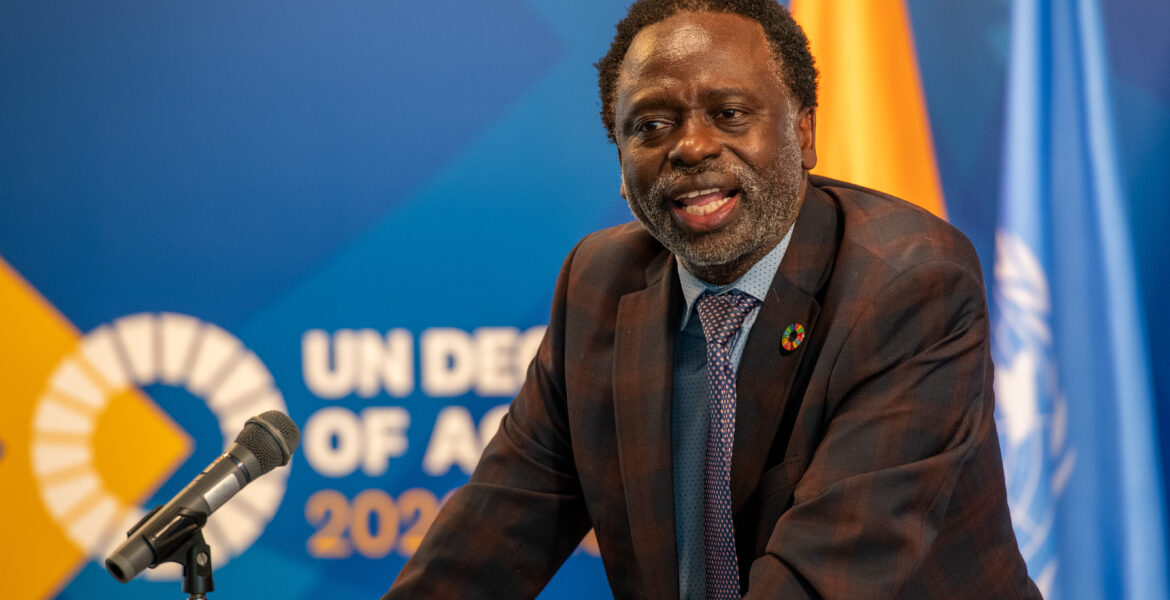
Tshilidzi Marwala, Rector of the United Nations University and Under-Secretary-General of the UN, talked with Diplomatic SOCIETY about the future of education at UNU and beyond.
You are Rector of the United Nations University as well as Under-Secretary-General of the UN – how can one imagine the connection and cooperation between the UN as a policy maker and the UNU as an academic institution?
As the research and academic arm of the United Nations, UNU occupies a unique space where evidence-based insights can directly inform global policy. Through 13 institutes across 12 countries, UNU serves as a bridge between policymaking and research, providing a platform where decision-makers can engage with complex scientific and policy issues in an accessible way.
UNU’s relationship with the broader UN system operates on several levels. As Rector, I am also a UN official, holding the rank of UN Under-Secretary-General. We are not outside observers commenting on UN affairs but rather genuine insiders, with a seat at the table and a real responsibility to contribute. Beyond research, UNU plays a substantial role in developing the next generation of sustainable development leaders and practitioners through postgraduate degree programmes and numerous non-degree training courses. It is this combination of rigorous research, quality education, and an unwavering focus on the SDGs that makes UNU genuinely distinctive.
Can you tell us a bit about the UNU Strategy 2025-2029 – what are its main pillars and goals?
Our 2025–2029 Strategy places strong emphasis on multilateral solutions to global challenges. This means fostering interdisciplinary collaboration, particularly in the Global South, where we aim to deepen partnerships with local communities and governments.
The Strategy is organised around three core priority areas: knowledge, partnerships, and impact. The knowledge pillar is about producing research that is rigorous, independent, and policy-relevant. Alongside that, we are working to expand our educational offerings. Together, these efforts span the defining issues of our time, from peace and security to climate change and emerging technologies. The partnerships pillar is about deepening relationships across both the UN system and the wider academic community, with a particular emphasis on our partners in the Global South. Finally, the impact pillar is about strengthening UNU’s visibility and brand, which we are actively pursuing by broadening our public outreach and ensuring that our research meaningfully influences global policy and practice.
What can organizations like the UN or the UNU do to bridge gaps in education?
Coming from a background in both science and education, I have long believed that technology holds the key to many of education’s most persistent challenges. In rural schools where qualified teachers are scarce, for example, online platforms can help bridge the gap. Education is a human right which should be accessible to all, and we have the tools to make this possible.
Today, millions of young people are still denied access to quality education, and the burden falls hardest on those least able to bear it: girls, those living in conflict zones, marginalized communities, and children living in poverty. But access alone is not enough. The content of education must also evolve. Global challenges like climate change, inequality, digital disruption, and conflict are deeply interconnected, and preparing students to navigate them requires interdisciplinary thinking, solidarity, and intercultural understanding.
The UN exists precisely to address challenges that no single country can solve alone. But institutions can only do so much. Young people need to recognize that these global conversations are not happening somewhere far away; they are much closer than they appear. Commitments such as the Pact for the Future and the Declaration on Future Generations reflect a growing UN recognition that young voices matter. We can provide the platform, but it is up to them to step forward and use it.

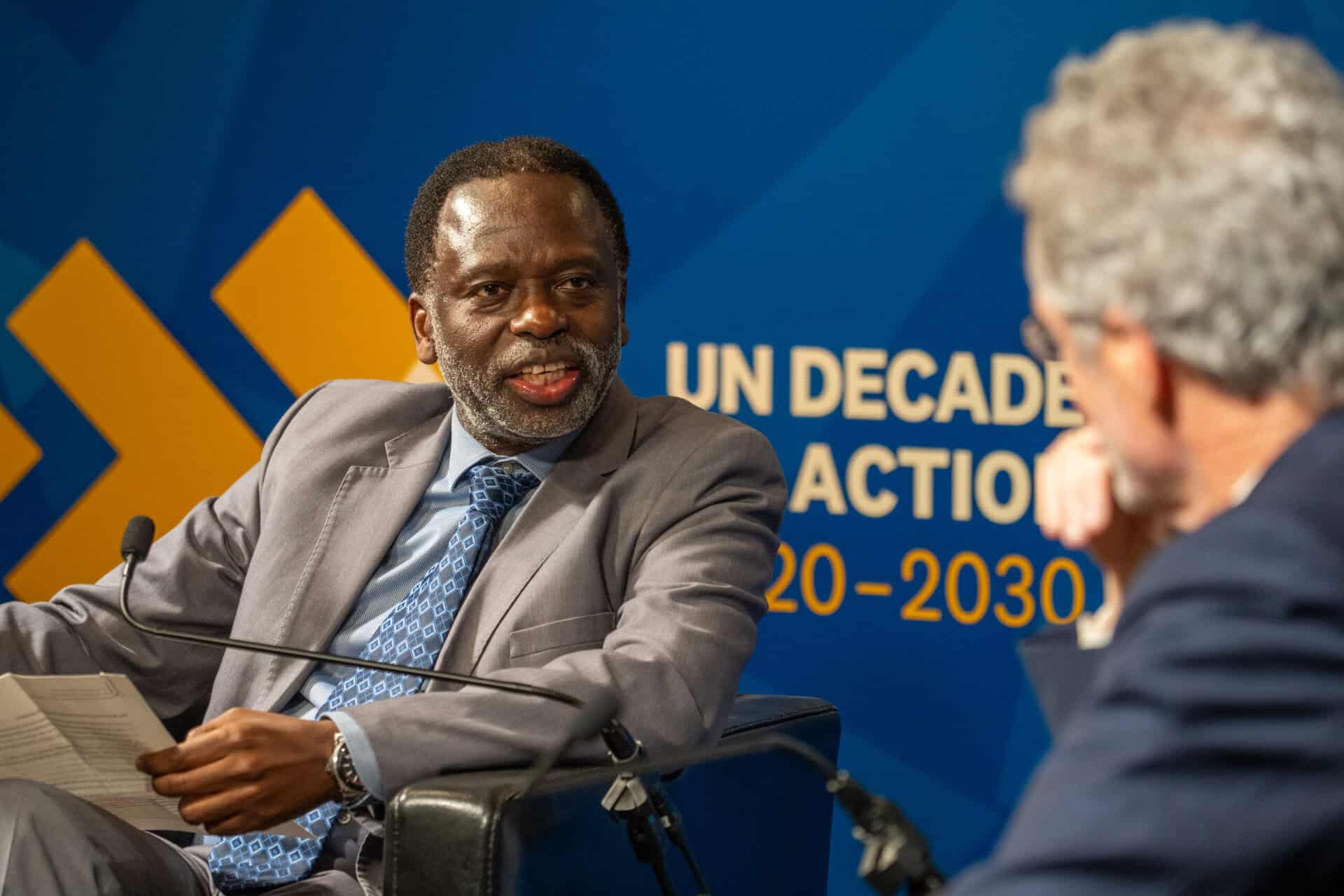


What is your personal vision of the “ideal” education for future generations, considering that there are significant challenges waiting ahead?
The world we are preparing young people for is fundamentally different from the one that shaped our current education system. Traditional models of education are no longer sufficient for a rapidly evolving global landscape. Information is now widely accessible, but the ability to interpret that information meaningfully is what truly matters. Students must learn how to question assumptions and develop innovative solutions. Alongside this, creativity and adaptability should be nurtured, as many of the jobs and challenges of the future do not yet exist.
Equally important is the development of human empathy and emotional intelligence. As technologies such as AI become more integrated into daily life, distinctly human qualities will become even more essential.
A key feature of ideal education for the future is its multidisciplinary nature. The challenges facing humanity are complex and interconnected, and they cannot be addressed through isolated fields of study. Students in technological and scientific disciplines should engage deeply with the humanities and social sciences to understand the ethical, cultural, and societal implications of their work. Likewise, students in the humanities should develop a foundational understanding of science and technology to remain relevant and informed.
Speaking of new technologies – what are, in your opinion, the biggest chances AI is holding in the realm of education? And what are the biggest dangers? Do you think that there is sufficient regulation in this regard?
AI holds extraordinary promise for education, and I have spent much of my career trying to realize that promise. It is essential that students are exposed to the potential of AI before they graduate. The understanding of this technology will aid decision-makers and practitioners alike to use it as a tool to solve some of the complex problems that confront them. AI can personalize learning at scale, extend quality education into under-resourced communities, and help us predict and address learning gaps before they become permanent. It can also help us reimagine the very nature of the learner. Traditionally, learners have been young, fresh out of high school and enrolled in on-campus, lecture-based programmes. However, this is changing rapidly as we see an increase in the enrolment of older, working adults who have unique learning requirements. AI makes it possible to meet all these learners where they are. But the dangers are real and I refuse to minimize them. The first and most urgent is bias. We are actively working on removing bias in algorithms so that they do not discriminate against facial expressions of people from the African continent, since AI is less accurate in recognizing people of colour. If we train AI systems on data that reflect historical inequality, we will entrench that inequality permanently into our institutions.
The second danger is what I call data poverty in the Global South. If full data is not available, AI algorithms do undesirable things, such as discriminating against or being less accurate about the digital minority. AI-generated synthetic data can partially address this, but it is less reliable than real data, and it can also be weaponized. Governance is necessary, but it must be agile and informed. We need governance frameworks that address data quality and consent, algorithmic transparency, and equitable access. Clear standards, policies, legislation, and institutions need to be established to guide the ethical and responsible use of AI, protecting individuals and society from potential harms. Of course, the pace of AI development has far outstripped our regulatory capacity, especially in the Global South. One of the most important recommendations I have made is that we must educate lawmakers on AI because you cannot govern what you do not understand. We must also ensure that the Global South is not simply a recipient of regulations written elsewhere, but an active co-creator of the norms that will govern these technologies. That is a central part of my work at the United Nations University.