
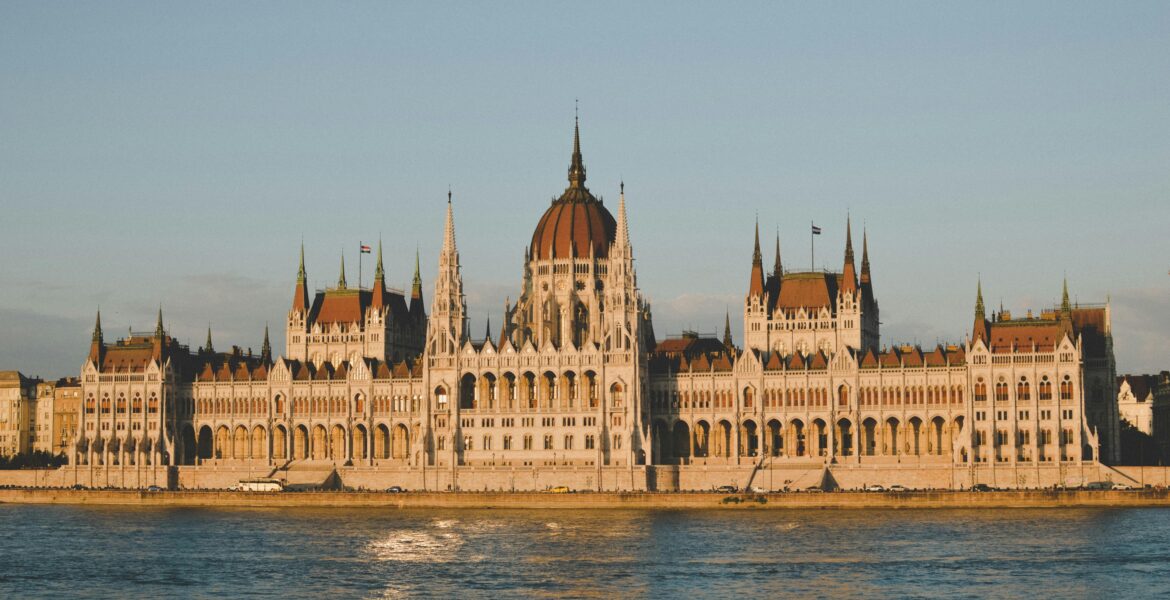
Among EU Heads of State, there has not been such an audible collective sigh of relief for a long time. A clear majority of the Hungarian population voted in the April 2026 parliamentary elections for the party “Tisza,” led by Péter Magyar.
Text by Emil Brix

The new Prime Minister has positioned himself, both during the election campaign and in his first public statements in office, firmly on a pro-European course. For the European Union, this is very positive news. A departure from previous blocking positions, strengthened rule of law, and a more robust fight against corruption should increase the chances of greater joint action within the European Union.
At the same time, this should open up a real opportunity for the Central European region, for the first time in a long time, to realise its potential as one of Europe’s power centres. Starting from the core of the four Visegrád countries—Poland, the Czech Republic, Slovakia, and Hungary—an alliance expanded to include countries such as Austria, Slovenia, Croatia, and perhaps Romania could emerge, jointly developing proposals for the future evolution of the EU. Magyar also proposed this during his first official visits to Warsaw and Vienna, and this too is very positive news for the EU.
Across all key challenges—from economic competitiveness and European security and defence to the EU enlargement promised since 2003 to the Western Balkan states—the future will depend on the attitudes and actions of a group of countries that were admitted relatively quickly into the EU after the end of the Cold War but were regarded by the older member states as the periphery of the European project.
However, such a “return to Europe” also applies to sentiment on Europe’s western periphery. The United Kingdom, Iceland, Greenland, and perhaps even Norway are beginning—given a world order that currently offers little security—to consider EU membership for the first time or once again.
The European project is more attractive than it often believes itself to be. It is not only attractive to its member states but also to the large majority of countries worldwide that see Europe resolving internal conflicts peacefully, guaranteeing participation even for smaller states, and promising shared security.
But there is also Russia, its neighbour. The Kremlin’s foreign policy adviser, Yuri Ushakov, is said to have recently told French negotiators in Moscow: “Go to hell!” How can Europe achieve peace on the continent? Most likely only by deploying all of its strengths. For Europe’s common security, alongside military defence capability, economic pressure, and comprehensive and effective support for Ukraine, diplomacy must also be employed. “I do not know what Europe would do at the negotiating table,” said Sergey Lavrov. Given the European states’ stance on the war, it is unclear what contribution they could make. His superior now sees things somewhat differently.
The EU should prepare itself well for such talks. One can only hope for the diplomatic skill needed to achieve a just and lasting peace in Ukraine—even if Trump is not interested and Putin does not want it.
I am convinced that Russia will always remain part of Europe’s destiny—and vice versa.