

Each issue of Diplomatic SOCIETY features a distinguished selection of guest contributors who offer their perspectives on current developments in politics, society, business and culture.

Martin Eichtinger has been Director of the Diplomatic Academy of Vienna – Vienna School of International Studies since 2025. Previously, he served as Austria’s Ambassador to Italy (2024–2025) and to the United Kingdom (2015–2018). From 2023 to 2024, he was Special Envoy for Neighbourhood Policy and the Foreign Policy Dimension of the Danube Region at the Federal Ministry for European and International Affairs (BMEIA). His previous positions also include Member of the Government of Lower Austria (2018–2023), Head of the Cultural Policy Section at the BMEIA (2010–2015), Secretary-General of the Federal Ministry for Economics and Labour (2006–2007), and Chief of Staff at the same ministry (2003–2007). In his contribution, he explores how the Diplomatic Academy of Vienna is addressing the opportunities and challenges posed by artificial intelligence in teaching and education.
Maria Rauch-Kallat brings more than two decades of experience in a wide range of political roles, including several terms as Federal Minister, Member of the Austrian National Council and Secretary-General of the Austrian People’s Party (ÖVP). Today, she heads mrkConsult and mrk diversity management gmbh. Her areas of expertise include strategic consulting and communications, corporate crisis management, executive coaching and public affairs. An academic business consultant and educator, she also holds a number of public and voluntary positions in NGOs and serves as President of Club alpha and the Mentory Club. For Diplomatic SOCIETY, she contributes an article examining women and the media.


Emil Brix is a diplomat and historian who served as Director of the Diplomatic Academy of Vienna – Vienna School of International Studies until August 2025. He joined the Austrian diplomatic service in 1982 and subsequently held a number of senior diplomatic positions, including Ambassador to the United Kingdom (2010–2015) and Ambassador to the Russian Federation (2015–2017). Since 2024, he has also served as President of the Austrian Research Association. In his latest contribution, he examines how traditional diplomacy must adapt to a rapidly changing international environment.
Stefan Liebing is Honorary Consul of Cameroon in Hamburg and Managing Director of the Conjuncta Group. From 2012 to 2023, he served as Chairman of the German-African Business Association (Afrika-Verein der deutschen Wirtschaft). He is also an Honorary Professor of International Business at Flensburg University of Applied Sciences. His work focuses on international economic relations and the development of major investment projects. In the current issue of Diplomatic SOCIETY, he explores how artificial intelligence is reshaping the “geography of globalisation”.


Arlind Zeqiri is Managing Partner at LGP Project Solutions, with offices in Vienna, Skopje, Dubai and Istanbul, and at Lansky, Ganzger, Zeqiri & Partner Skopje DOO. He previously served as Minister for Foreign Investments of the Republic of North Macedonia. He studied law at Southeast European University in North Macedonia and diplomacy at the International University of Vienna. His professional career has included positions at the Northwest Chamber of Commerce of North Macedonia and the Agency for Foreign Direct Investment and Export Promotion, as well as heading the Ministry for Foreign Investments. In this issue, he examines North Macedonia’s role as a strategic gateway to Southeast Europe.
Regina Wiala-Zimm began her professional career in Vienna’s urban planning department following her studies in architecture, where she focused on EU projects and cooperation with cities across Europe. After moving to the City of Vienna’s Directorate for Europe and International Affairs, she broadened her field of work to include global networks addressing issues such as World Heritage and European Neighbourhood Policy. She was also responsible for cooperation with the United Nations organisations based in Vienna. For Diplomatic SOCIETY, she travelled to Uzbekistan to report on the international media forum in Tashkent.


Klaus Wölfer is a former Austrian Ambassador to Indonesia and Türkiye, former Head of Department II.5, “Southeastern Europe and EU Enlargement”, and former Political Director at the Austrian Federal Ministry for Foreign Affairs. Since 2017, he has served as a member of the Board of the Institute for the Danube Region and Central Europe (IDM). A Doctor of Law, he also works as Senior Expert Counsel at the international law firm LANSKY, GANZGER, GOETH & Partner. For Diplomatic SOCIETY, he draws on his extensive experience and expertise as a moderator and adviser.
Robert Stoppacher began his career in 1979 in the news department of ORF Radio and held a variety of positions at Austria’s public broadcaster until 2020. His roles included Foreign Correspondent in Brussels, Head of the Domestic Politics Desk in Current Affairs Radio, Editor-in-Chief of Television News, Editor responsible for ZIB 1, and Head of the ORF Parliamentary Affairs Desk. Today, he is a lecturer in media training at the University of Applied Sciences Wels and a media trainer at the agency bettertogether. He also leads workshops on radio journalism for Freies Radio Salzkammergut, produces radio features for the ORF Ö1 travel magazine AMBIENTE, and works as a media expert for the Austrian Parliament’s DEMOCRACY WORKSHOP. He is also an editor and partner of Diplomatic SOCIETY.
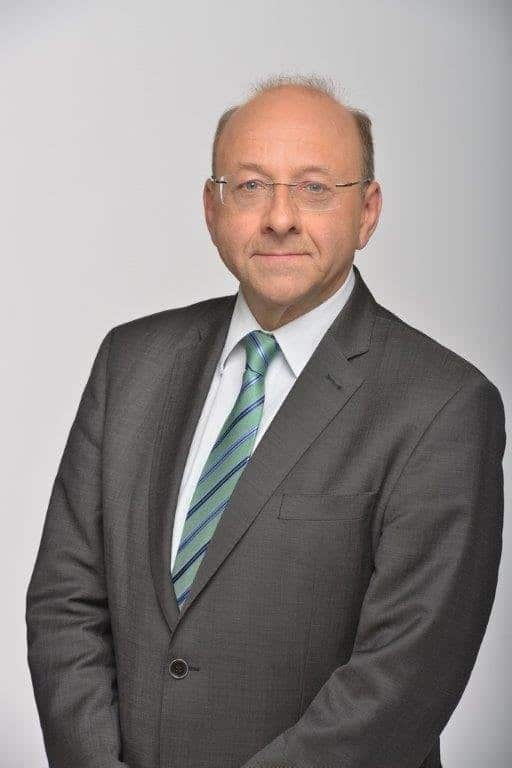

Arian Faal is a foreign-policy analyst with extensive experience as a guest lecturer at the Theresian Military Academy in Wiener Neustadt and the Diplomatic Academy of Vienna. He has authored more than 5,000 articles on Iran, the Middle East, China and geopolitics. He spent 15 years at Wiener Zeitung and five years at the Austrian Press Agency (APA), and served as Private Secretary to former Austrian Federal President Rudolf Kirchschläger from 1998 to 2000. In recognition of his contribution to the Theresian Military Academy in Wiener Neustadt, he was awarded its Golden Academy Ring. For this issue, he interviewed Austrian Federal Minister for Defence Klaudia Tanner and contributes an analysis of the strategic importance of military diplomacy.