
by Sarah Heftberger
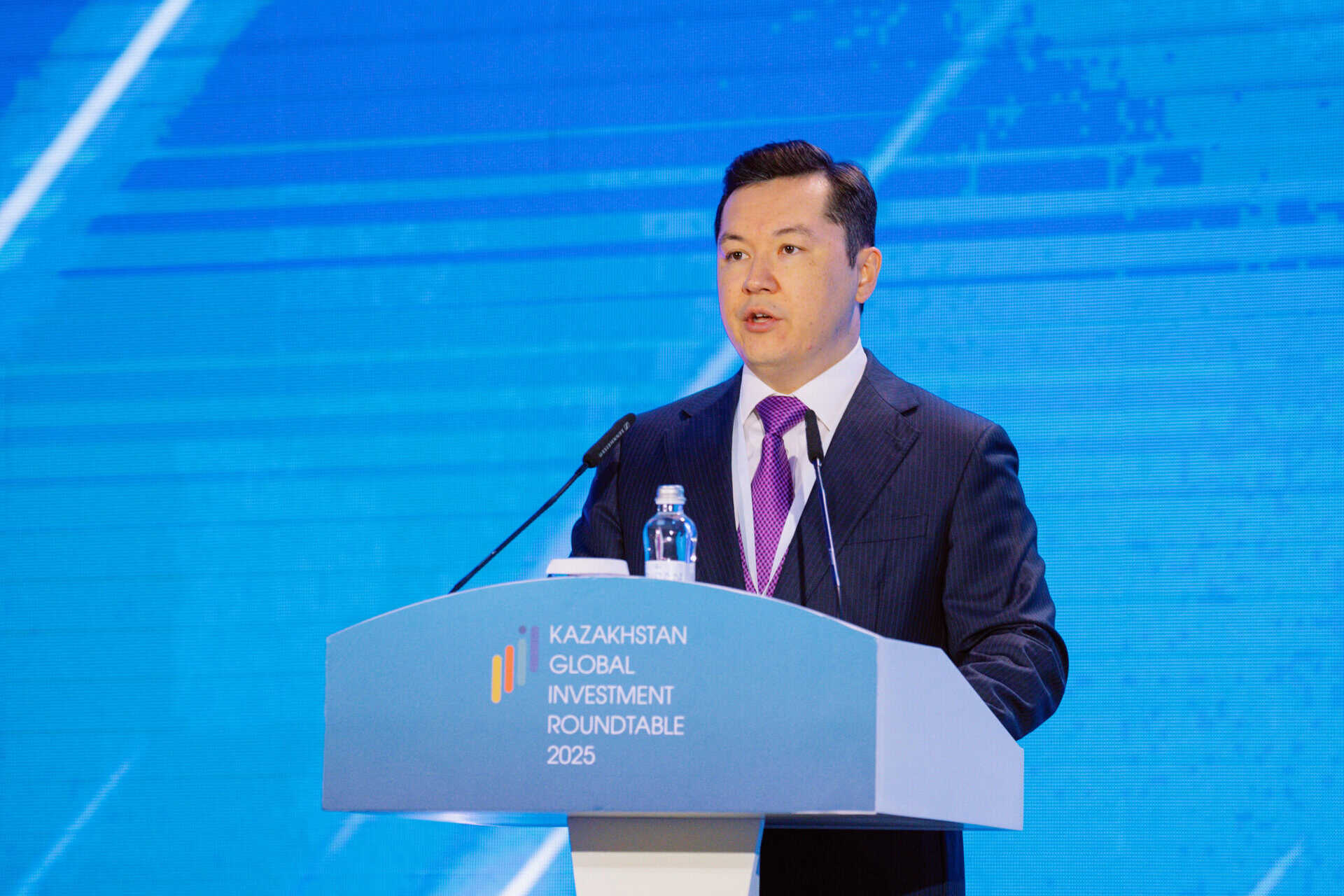
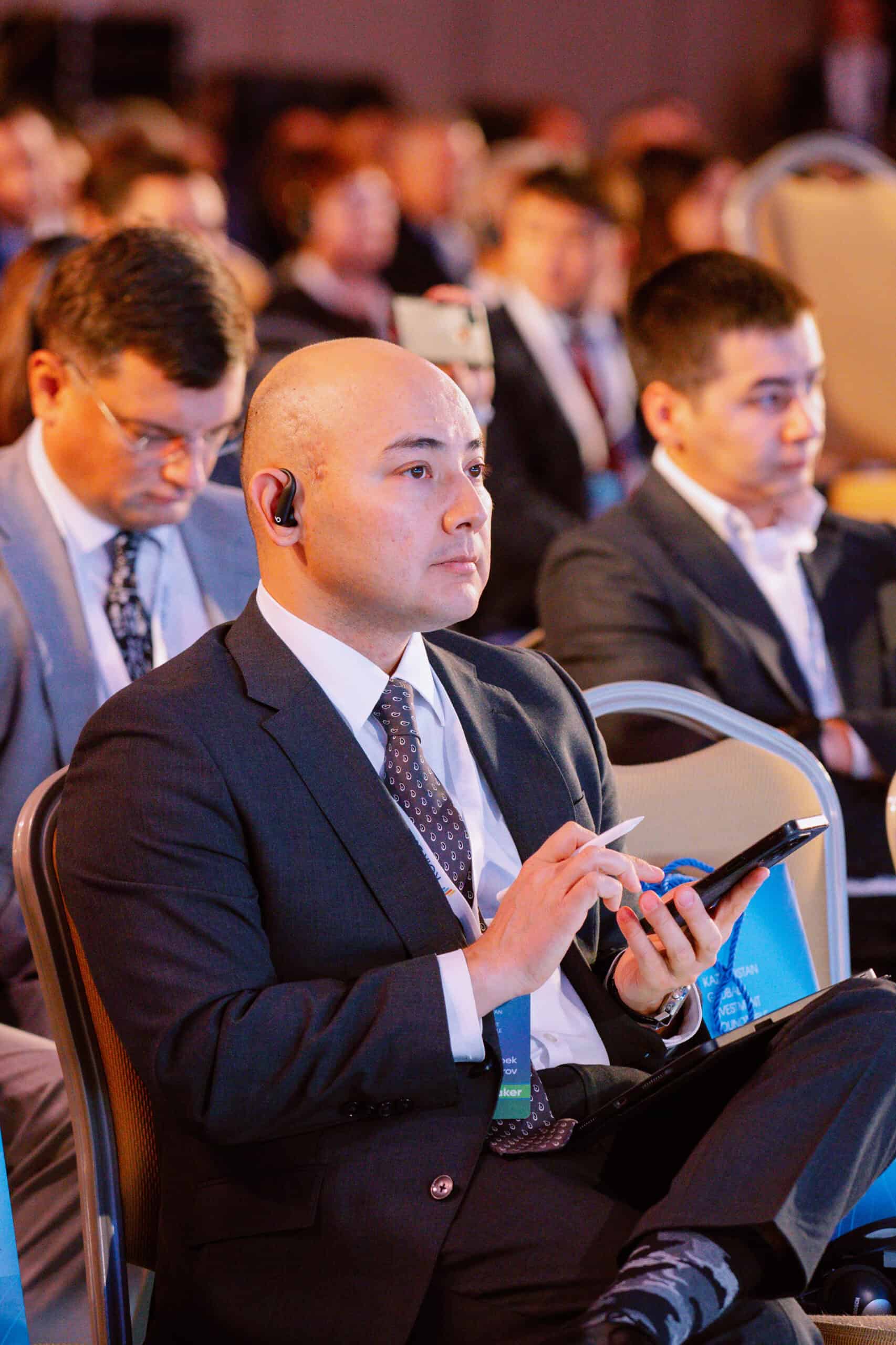
On October 31, around 1000 select delegates from over 50 different countries met in Kazakhstan’s capital Astana to discuss investment opportunities in Central Asia’s largest economy.
In the framework of the 8th Kazakhstan Global Investment Roundtable (KGIR 2025), the international panellists as well as Kazakh government officials – among them Prime Minister Olzhas Bektenov, Minister of Industry and Construction Yersayin Nagaspayev and Deputy Foreign Minister Alibek Kuantyrov – highlighted Kazakhstan’s growing importance as a trade partner in the region, the country being the largest economy in Central Asia and one of the world’s leading nations in terms of natural resource wealth. Furthermore, its geopolitical location in the very heart of the Eurasian landmass and along the Silk Road makes it a crucial bridge between Asia and Europe – a factor that the international investors present at the forum repeatedly cited as one of the reasons for choosing to establish a presence in Kazakhstan.
Among them were also several representatives of European companies, including Jérôme Boyet, Managing Director for Western and Central Asia of the French multinational company Alstom, Viacheslav Maltsev, President of Carlsberg Kazakhstan, Alexander Luft, Chief Executive Officer for the CIS region of Swiss rail vehicle developer Stadler and Matteo Patrone, Vice President of the European Bank for Reconstruction and Development, who – in his keynote – highlighted the remarkable achievements of Kazakhstan in key areas like digitalization, regional cooperation, connectivity and green transition.
In his speech, Prime Minister Bektenov emphasized these successes: He pointed out how Kazakhstan’s economy has shown remarkable resilience with a GDP increase of 6,3 % in the first nine months of the year while investments in fixed capital rose by 13.5 %, reaching around 44 billion US Dollars and defying global trends. He added that the positive investment climate has been confirmed by top rating agencies like Moody’s, who upgraded the country’s long-term rating with a “stable” outlook – the highest rating in the country’s history since its independence.
“Kazakhstan remains an open and predictable country for long-term investments. Building a relationship of trust with investors is an integral part of our investment policy. I invite everyone to make full use of the opportunities available for developing business in Kazakhstan. We are ready to provide comprehensive support at every stage of project implementation“, he further stated.




Diversification
In recent years, the oil and mineral-rich country increasingly searched for other sources of income, actively pursued economic diversification and created a diverse portfolio of investment areas including transportation, renewable energy, construction, digital transformation and manufacturing. Thanks to a combination of strategic location, the adoption of the English common law principles in the AIFC court and a favourable tax regime in the framework of the special economic zones (SEZs), the country with around 20 million inhabitants already managed to attract increased investment in several new sectors, defying the global downturn of Foreign Direct Investment.
With the establishment of the Astana International Financial Center (AIFC) in 2018, the former Soviet country created yet another institution contributing to the sustainable economic development of Kazakhstan and the region. Renat Bekturov, Governor of the AIFC, who kicked off the forum in Astana, summarized the success of the Center, which, according to him, registered more than 4200 companies and 17 billion dollars in investment since its launch in 2018.
Major milestones in Kazakhstan’s industrial modernizations and diversification include the opening of the KIA Qazaqstan automobile plant – just a week prior to the forum – which is expected to employ 1.500 people and produce up to 70.000 vehicles annually, the plans of PepsiCo to construct Central Asia’s largest snack plant and Fujian Hengwang Investment’s project aiming to build a steel plant and creating up to 2.500 jobs.
KGIR 2025: A successful outcome
As the government press service later reported, the KGIR 2025 resulted in the signing of 49 agreements worth 7,5 billion US Dollars across multiple sectors, among them a strategic agreement between Akmola Region and China’s Hopeful Grain & Oil Group for the construction of a deep wheat-processing complex, a Framework Agreement between the Ministry of Agriculture and Coca-Cola Almaty Bottlers LLP, and a deal with Asyl Sugar to build a new sugar plant.
Moreover, the Turkish company Orzax Alyors presented a project to build Central Asia’s largest dietary supplement facility, with the Head of the company Selman Alimoglu stating that the production would create 500 jobs and would achieve an annual export volume of 100 million Dollars. In energy and environmental projects, the Ministry of Ecology and Natural Resources signed with East Hope for the implementation of the “Astana Energy Eco-Park” project and with Shaanxi Construction Engineering Kazakhstan to build a waste-to-energy plant.
Furthermore, the Swiss rail operator Stadler, represented by CEO Alexander Luft, emphasized its commitment to long-term projects in Kazakhstan, describing it as a “strategic choice” to invest in Kazakhstan.
****
European countries as main investors
Over the past decade, European countries were among the most important investors in Kazakhstan, with the Netherlands leading the general ranking by a wide margin. Between 2013 and 2023, it invested 71.2 billion Dollars, the USA – ranking second – accounted for 39.4 billion Dollars of investment in the same period. Other major European investors include Switzerland (25.6 billion Dollars), Belgium (10.2 Billion Dollars) and France (9.2 billion Dollars).
Austria & Kazakhstan
Austria and Kazakhstan’s trade volume also reached new highs in recent years: In the first trimester of 2025 (January to April), imports (with crude oil accounting for 98.6 % of imports) grew by +2.2 percent to 298.7 million Euros while exports grew by 4 percent to 104.5 million Euros, making Kazakhstan Austria’s most important economic partner in Central Asia and the top supplier of crude oil. Currently, around 400 Austrian companies are operating in the Kazakh market, 40 of them have branches in the country.
A current example of Austrian involvement in Kazakhstan is the “Yryskeldi Qajy Ata Meshiti” mosque, in whose construction several Austrian companies took part, including NEUE BAUPHYSIK UND ENERGIEDESIGN GMBH-NEUBAU, Das Leitwerk GmbH, IPJ Ingenieurbüro P. Jung GmbH, Weissenseer J OST GmbH and Kärnten Solar / Ingenieurbüro Jaind & Garz GmbH.
Additionally, just in April 2025, Austrian and Kazakh representatives agreed to deepen their strategic partnership through diversified economic ties in the framework of the 12th session of the Intergovernmental Commission on Economic, Agricultural, Environmental, Industrial, Technical and Technological Cooperation in Astana. Promising investment areas include transport and logistics, energy, infrastructure, agriculture and tourism. The Middle Corridor – also called Trans-Caspian International Transport Route – in particular holds great potential for Austrian companies. In August 2025 and at Austria’s initiative, Kazakh Deputy Prime Minister and Foreign Minister Murat Nurtleu held a phone call with Austrian Foreign Minister Beate Meinl-Reisinger, discussing bilateral and multilateral issues, reaffirming their commitment to maintaining constructive dialogue and cooperation – a call that, once again, confirmed the historic high the bilateral relations have reached.